Care of the Dying Patient

Warning

Objective

This guideline aims to support recognition of the dying patient, provide a framework for decision making in an ethically challenging environment, and provide advice on both the pharmacological and non-pharmacological management of the dying patient, in order to empower every member of the medical team to prompt and initiate best supportive care 


Audience

This guideline applies to registered healthcare providers. Vocational and non-vocational healthcare providers who are not professionally registered but supported by their own treatment guidelines.


Scope

In the event of a large-scale conflict, it is inevitable that there will be a significant number of patients who will have unsurvivable injuries, and there may be occasions when patients who would survive under ideal conditions will sadly die due to overwhelming numbers of casualties, or tactically unavoidable delays to evacuation. By using this guideline, it is recognised that you may be operating outside of your normal clinical practice due to the number and type of casualties and/or operational constraints.

This guideline provides a framework for those who deliver supportive medical care and to allow the medical team to alleviate pain, breathlessness, seizures, distress/agitation and manage those with unsurvivable injuries. 

It must be clear that this guidance is designed for large scale combat operations, where significant numbers of serious casualties are expected in short timeframes. In the case of smaller scale operations or exercises the Competent Medical Authority should be made aware of the clinical situation on the ground and that the clinical teams are utilising this guideline. 

The aim is to empower the healthcare team to deliver quality care in a challenging environment and to reduce moral injury within themselves and the medical team by being able to deliver care to those who are dying. 


Recognising dying

The most likely causes of battlefield death in the short term are non-compressible torso bleeding and head injury. If very long holds are required, there is a risk that patients may develop sepsis which may not be treatable without surgical care. 

Recognition of the dying patient may be challenging. Clinical signs that suggest that a patient is imminently dying may include:

Reduced consciousness or agitation

Pale skin (in Caucasians)

Cool peripheries, especially if moving proximally

Cheyne-Stokes breathing – an abnormal pattern of breathing which is cyclical between hyperventilation and apnoea.

Bradycardia

In most patients who are dying of bleeding or head injury, the likely pattern will be deteriorating conscious level and slowly reducing respiratory rate. 


Decision Making Support Tools

Note that this can neither be definitive or entirely objective. The clinical team can, however, use these considerations to support their decision on individual patient management. 

This guideline provides two versions of a decision-making support tool on recognition of dying patients. A short version is shown here; a long version is available below. All clinicians must be aware that these decisions can be complex and emotive. It will be especially challenging for those closely embedded within units to manage their friends and colleagues under such circumstances.

The team must come together and accept that there is never a perfect solution.

Decision Making Support Tool (short)

Has the patient sustained severe injuries?

Have you treated those injuries to the best of your ability?

Does the patient have signs of ongoing deterioration such as reducing conscious level, shock or respiratory distress despite this?

Does the rate of decline suggest that they will not survive to reach the next level of care?

Have you done all you can to expedite evacuation such as raising priority or reallocating platforms?

Have you done all you can to bring additional expertise or equipment to the patient?

If the answer to all of the above questions is yes then the patient is likely to die, despite all you can do. With that in mind, you should aim to manage their symptoms to the best of your ability.


Management of the Dying Patient

The recognition of the dying patient is not a council of hopelessness. Clinicians must therefore start from the principle that they should aim to do the most with their resources and should consider reducing suffering as one of their primary duties. You can only do the best you can with the kit and experience available to you.


Non-Pharmacological Management of The Dying Patient

As important as the physical symptoms in these patients are, their psychological and spiritual welfare should be equal in priority. For many people, the fear of death may be a bigger concern than their physical symptoms. Clinical staff should consider how best to support this, and how to speak to and comfort the dying. Consider utilising chaplaincy support if this is available. The accordion content below includes advice that may be useful, especially if chaplaincy support is not readily available.

In the resource limited environment, non-pharmacological management strategies are important to utilise as this may decrease the amount of pharmacological management required. The fundamentals of non-pharmacological care centre on patient comfort and dignity. Implementing simple, low resource techniques may be all you can achieve. The below can be utilised for all patients and should be considered when managing those receiving supportive care. Some may not be possible to achieve but efforts should be made to try.

Environmental comfort - keep patients warm, moving to a quieter area, covering their ears to reduce noise.

Positioning - working together to find a more comfortable position.

Oral care and hydration - give sips of water and mouth care to address thirst.

Pain avoidance - covering wounds, splinting wounds, urinary catheters for urinary retention.

Communication & reassurance - listen and talk to your patient, hold their hand, let them know that they are not alone.

Relaxation techniques - breathing techniques can help reduce anxiety/distress

Fanning - to help reduce the sensation of breathlessness

Ask what you can do for them


Pharmacological Management of The Dying Patient

Consider what route is most appropriate for your patient given the resources and means of access available. 

The below includes guidelines on managing various symptoms the patient may be experiencing. Use your clinical judgement to assess effect and dosing requirements.

Pain

Titration may be required to achieve adequate pain control and patients may require less or more than below. Frequent pain scores initially will be required to assess effect.

For moderate to severe pain (score 2-3):

IV/IO/IM/Subcut: morphine 5-10mg or ketamine 0.1-0.3mg/kg

Buccal: fentanyl 800mcg lozenge  

Tourniquets can cause severe pain. If the patient is dying of other injuries, and the tourniquet pain is unmanageable, consider loosening. 

Bleeding

Assess whether bleeding can be controlled.

If the bleeding is not compressible, and the patient cannot be moved to a surgeon in a timely fashion, death is likely to be inevitable

Bleeding itself may be painless. Manage pain as above. If the patient is distressed, rapid acting benzodiazepines can be utilised, titrating to maximum dose as needed:

IM: can be rapidly titrated in dosing intervals up to 10mg midazolam (deltoid or gluteal)

Rectal: diazepam 10mg rectal solution

IV/IO: midazolam 5-10mg or diazepam 10mg

If bleeding continues at a slower rate, can use further doses of the above 

Distress/Agitation

Try to assess and manage pain first. Cover any mutilating or distressing wounds

If distress is unmanageable otherwise, benzodiazepines may be helpful 

IV/IM/Subcut: midazolam 2-5mg, 1-2 hourly, as required

Seizures

Seizures may present with muscle spasms/jerking movements; loss of bowel or bladder control, clenched teeth or irregular breathing.

Apply oxygen, if resource allows

If persists for more than 5 minutes or if there are serial seizures with no recovery between consider status epilepticus.

IV/IM/Subcut: midazolam 5mg; can be repeated 

Breathlessness

Patient may report feeling short of breath, panic sensation or chest tightness. Look for increased respiratory rate, increased effort of breathing and/or use of accessory muscles

IV/IM/Subcut: morphine 2.5mg, 2-4hourly, as required 

If patient is also agitated, consider adding

IV/IM/Subcut: midazolam 2.5mg, hourly, as required

Considering pharmacological management, there is no maximum dose in the dying patient, provided medication is given increments and titrated to effect.

In the context of large-scale combat operations and multiple casualties, the clinical team should aim to provided best possible care, using the equipment and medications available to them in the circumstances they face.


Supporting the Medical and Wider Team

Caring for the mental health and psychological wellbeing of individuals within the medical and patient’s wider team should be a priority for all. 

Care for the dying can be distressing and morally challenging. It is imperative that the medical teams support and care for each other to reduce the moral impact on themselves and others around them. 

For distressing/challenging scenarios, a debrief should take place for clinical staff, time/environment permitting. Please consider signposting to a Trauma Risk Management (TRiM) Practitioners.

Preparation in clinical training is the most effective way to protect against moral injury and incorporating the management of the dying patient into training is a must.

Additional advice is available below.

Decision-Making Support Tool (long version)

Define the clinical situation for this individual patient.

What is the extent of known and suspected injuries/illnesses? Accepting the limitations in diagnostics at your current location.

How much pain is the patient in currently, and what analgesia have they already had?

What is the current physiology, and trajectory? For example, rising heart rate, falling blood pressure?

What is the likely prognosis, if known? Bear in mind this is likely to be a best guess.

If every resource were available, what treatment do you think the patient needs?

What is the local clinical and tactical situation?

How many other patients are currently with you, or imminently expected?

What is their level of severity?

Are the units you are supporting currently fighting, or are you expecting indirect fire?

Are you under threat currently, and might you have to move at short notice?

What local resources do you have? What are your limitations? For example blood and drug stocks.

What additional resources could you employ?

Could additional blood or drugs be brought, for example by drone?

Do you have remote support or telemedicine options?

Could you evacuate the patient to another medical facility? This may be non-UK or civilian. There may also be circumstances where the best course of action is to surrender the patient to the enemy. This may require medical personnel to become retained persons to provide ongoing care.

What is the evacuation plan?

What platforms are available? Are they likely to meet the anticipated and predicted need?

What is the time and distance to hospital care? What’s the turnaround time?

Are there constraints in terms of safe evacuation? For example unproven routes, drone threat, indirect fire.

Can the patient’s needs be met by the nearest hospital facility, or will they need onward evacuation?

Documentation

Documentation is required by the Medical Officer on the decision and rationale to provide supportive care of the dying patient. This is to enable communication should patients move through the evacuation chain and allow for others to understand earlier decisions made. 

If FMed1066, specifically designed for Care of the Dying Patient, is available please utilise this for documentation. If not, then the below is recommended for inclusion in written documentation.

  • Name, rank and service number. 
  • Injuries sustained
  • Mechanism of Injury and approximate time of injury 
  • Treatment delivered (if any)
  • Rationale for the decision to implement Supportive Care of the Dying
    • Considerations to severity of injuries, any limitations of delivering active treatment such as resource limitation, estimated time to evacuation
    • Any operational context and constraints
    • Clinical opinion on likely outcome i.e. injuries not deemed survivable, unable to evacuate to required further management etc
    • Signs and symptoms of dying present
    • Discussions with team members to not start/withdraw active treatment 
    • Date and time decision made to implement Care of the Dying management
    • Non-pharmacological and pharmacological management of symptoms of dying 
    • Ceiling of Care plan including Do Not Attempt Resuscitation, plans for IV fluids, analgesia, antibiotics etc. 

Spiritual & Psychological Care for the Dying Patient (5 Rs)

Supporting psychological and spiritual welfare is an important and resource-light part of ensuring quality care for the dying patient. There is some overlap between psychological welfare and spiritual welfare, and good spiritual care can ensure both are addressed. Spirituality can be defined as ‘an individual’s core religious, philosophical, or human values that form a sense of identity, purpose, motivation, character, and integrity’. Alleviating the fear of death and supporting the expression of core values has a profound impact on the experience of dying for the patient and can help to reduce the moral injury for the carer. 

Traditional, chaplaincy services have led the pastoral and spiritual care for service personnel in life, as well as in dying and in death. Where chaplaincy services are not available the following 5 Rs algorithm can be used by any care provider to support dying patients.

The overarching question to ask is: ‘Whose need am I meeting?’ The aim is to provide psychological and spiritual care to the patient who is dying. An awareness of beliefs is helpful but clinicians and care provider does not need to have the same faith or beliefs to be able to support spiritual and pastoral care of a dying patient.

The 5Rs

Recognition - Identify and acknowledge that the patient is dying.

This is the most important step    

Be honest with the person about dying.

Look for dog tags / ask the patient if they have any particular beliefs.

If they are able to speak, ask them what helps / is meaningful to them in their belief/non-belief.

Respect – Respect the belief/non-beliefs of the dying person.

Remember whose need you are meeting.

If they have disclosed beliefs or preferences, what does it look like to honour that person?

Speak carefully and with compassion, with consideration of their beliefs.

Reassurance – What does the dying person need to still have some hope in this moment?

Be cautious with truth - they may not need to know everything that’s happening clinically.

Aim to provide calm presence and create space.

Encourage them not to be afraid and/or tell them that they are not alone.

Ask them if you can do anything for them.

Consider holding their hand or saying a prayer

Reflection – What thoughts will bring peace / comfort to the dying person?

Ask where they would want to be right now?

Ask if they would like to leave a message for anyone? Write the message down, even if you don’t have a plan for delivering it.

Consider prayer / mindfulness. If not comfortable praying and that’s what patient wants, consider finding someone else who can or read a pre-written one prayer such as the Lord’s Prayer or a Psalm (see below)

Ritual – What acts might be helpful or comfortable for the dying person?

Does their belief system have any rites or traditions that can be achieved practically? See further content below.

Use what you have to hand - perhaps a stone to hold (rock = solid foundation) or grass to touch (grass = life, seasons).

Prayers and Words of Comfort

Be aware that individuals who are dying may seek and find comfort and reassurance in a religious faith associated with family heritage or beliefs that they held previously; do not assume that a person who does not normally express any faith or religion would automatically not wish to share in prayer or rituals.

Some suggested pre-written prayers and words of comfort are included below.

Christians

The Lord's Prayer may be used for those who profess a Christian faith or are from a Christian tradition:

Traditional Form Modern Form

Our Father who art in heaven, 
hallowed be Thy name, 
Thy kingdom come, 
Thy will be done, 
on earth as it is in heaven. 
Give us this day our daily bread. 
Forgive us our trespasses, 
as we forgive those who trespass against us. 
Lead us not into temptation, 
but deliver us from evil. 
For Thine is the kingdom, the power, and the glory, 
for ever and ever. 
Amen.

Our Father in heaven, 
hallowed be Your name, 
Your kingdom come, 
Your will be done, 
on earth as in heaven.
Give us today our daily bread.
Forgive us our sins,
as we forgive those who sin against us.
Lead us not into temptation,
but deliver us from evil.
For the kingdom, the power, and the glory are yours,
now and for ever.
Amen.

The 23rd Psalm may also be used:

The Lord is my shepherd, I lack nothing.
He makes me lie down in green pastures, He leads me beside quiet waters, He refreshes my soul.
He guides me along the right paths for His Name’s sake.
Even though I walk through the darkest valley, I will fear no evil, for You are with me;
Your rod and Your staff, they comfort me.
You prepare a table before me in the presence of my enemies.
You anoint my head with oil; my cup overflows.
Surely Your goodness and love will follow me all the days of my life,
and I will dwell in the house of the Lord forever.

NIV

Judaism

Jewish prayers for a dying patient focus on confession, accepting God's will, and declaring faith. The most crucial prayer is the Shema Yisrael, ideally the last words spoken: "Hear, O Israel, the Lord our God, the Lord is One".

A short prayer a patient may want to say is:

My God and God of all who have gone before me, Author of life and death, I turn to You in trust. Although I pray for life and health, I know that I am mortal. If my life must soon come to an end, let me die, I pray, at peace.

If only my hands were clean and my heart pure! I confess that I have committed sins and left much undone, yet I know also the good that I did or tried to do. May my acts of goodness give meaning to my life, and may my errors be forgiven.

Protector of the bereaved and the helpless, watch over my loved ones. Into Your hand I commit my spirit; redeem it, O God of mercy and truth.

God reigns; God has reigned; God will reign forever and ever.

Blessed be God’s name whose glorious dominion is forever.

Hear, O Israel: the Lord is our God, the Lord is One.

The 23rd Psalm (above) may also be used.


Islam

Offer to help patients who follow the Islamic faith to turn towards the Qibla (in the direction of the Kaaba in Mecca) and comfort them with the Shahadah: Gently prompt the patient to say "La ilaha illallah" ("There is no god but Allah") or recite it near them.

Dua (Supplication) is a simple prayer: "O Allah, forgive [name of person] and elevate his station among those who are guided".

When the person passes, say "Inna lillahi wa inna ilayhi raji'un" ("To Allah we belong and to Him is our return")


Sikhism

These words from Sikh scripture can be said for patients who follow Sikh faith:

You are our Lord and Master; to You, I offer this prayer.
This body and soul are all Your property.
You are our mother and father; we are Your children.
In Your Grace, there are so many joys!
No one knows Your limits.
O Highest of the High, Most Generous God,
the whole creation is strung on Your thread.
That which has come from You is under Your Command.
You alone know Your state and extent.
Nanak, Your slave, is forever a sacrifice.

Guru Arjan Dev ji – 268

Chanting of ‘Waheguru Waheguru….’ can also be done by those around the patient alongside the above verse.


Hinduism

A short prayer to pray for a Hindu patient who has died:

As a man shedding worn out garments and takes other new ones likewise the embodied soul casting off worn out bodies enters into others which are new. We offer our prayers to our saviour, Ishwar to shower his choicest blessings upon the dear departed soul of ……to forgive his/her trespasses and to redeem the soul to His Kingdom/ Vakunth Loka to live a life of bliss forever.

Om Dyauh Shaantih, Antariksham Shaantih, Prithvi Shaanti, Raapah Shaantih,  Oshadhayah Shaantih, Vanaspatayah Shaantih,  Vishvedevaah Shaantih, Brahma Shaantih, Sarvam Shaanti, Shaanti Reva Saantih,  Saamaa Shaantiredhih, Om Shaantih, Shaantih, Shaantih.

Alternatively, a prayer for peace and wellbeing for the dying Hindu patient:

Om bhur bhuvah swah tatsavitur varenyam bhargo devasya dhimahi dhiyo yo nah prachodayat

O Almighty God! Thou art the giver of life, remover of pains and sorrows, the bestower of happiness, may we receive the supreme sin-destroying life of the Creator of the Universe. May thou guide our intellect in the right direction.

Oṃ sarve bhavantu sukhinaḥ
Sarve santu nirāmayāḥ
Sarve bhadrāṇi paśyantu mā kaścidduḥ khabhāgbhaveta
Oṃ śāntiḥ śāntiḥ śāntiḥ

Lord Almighty God in Thee May all be happy, May all be free from Misery, May all realise goodness, and may no one suffer pain.

Om Asato Maa Sad-Gamaya
Tamaso Maa Jyotir Gamaya
Mriyor-Maa Amrtam Gamaya
Om Shaantih Shaantih Shaantih

Lord Almighty God Lead me from the untruth to the
True reality, lead me from darkness to light,
Lead me from death to immortality.

Om Dyauh Shaantih, Antariksham Shaantih, Prithvi Shaanti, Raapah Shaantih,  Oshadhayah Shaantih, Vanaspatayah Shaantih,  Vishvedevaah Shaantih, Brahma Shaantih, Sarvam Shaanti, Shaanti Reva Saantih,  Saamaa Shaantiredhih, Om Shaantih, Shaantih, Shaantih.

O Lord of Universe! Thy celestial regions are full of peace and harmony, peace reigns on Thy earth and Thy waters, the herbs and trees are full of peace. All Thy forces of nature are full of peace and harmony. There is peace and perfection in Thy eternal knowledge. Everything in the universe is peaceful, and peace pervades everywhere through Thy grace. O Supreme Lord! The embodiment of Peace, grant us peace, grant us peace, Grant us peace


Buddhism

This short end of life prayer could provide comfort for dying Buddhist patients:

Salutations to the Noble Triple Gem: Buddha, Dharma and Sangha!!! 

Buddha taught that all life is impermanent and that all those who are born must eventually pass from this life. However, everyone has within them the seeds of their past good actions, which have the power to bring a fortunate rebirth in the future.

We pray that through the power of this virtue, through the blessings of the holy beings, and through the force of our heartfelt prayers, you will experience great good fortune and everlasting peace and happiness.

May all beings without exception be released from suffering and find true happiness!

May you go freely. May you find peace.


Words of Comfort without association to any specific faith

Patients who have no religious background may prefer words of comfort that focus on love, legacy, peace, and gratitude rather than theological concepts of afterlife or divinity:

Seek to emphasise comfort, the enduring impact of a life well-lived, and the release from pain.

Gentle, nature-focused language (like "Go gently on your voyage") can help a patient find peace and release.

Simple Gratitude: Short, heartfelt expressions, such as "Thank you for being you," offer comfort.

Consider using three key phrases: "You will not be alone," "You will not feel pain," and "We will be okay".


Other Faiths

For patients of other faiths, follow the principle of seeking to meet the needs of the patient and be guided by any wishes expressed by them. The patient may have a small book of prayers or something similar with them, or you may offer to read words from a sacred text if available.

Spiritual & Psychological Care for Care Givers (6 Rs)

The circumstances around caring for a dying patient can impact those directly and indirectly involved to a varying degree. It is important that the mental physical and spiritual well being of carers and the wider team is also considered. Tools to apply to self and colleagues to support mental and spiritual well being include the 6Rs below

Self Care

Recognition

Make time to check in with yourself regularly

Ask yourself: How am I feeling about what’s happening? 

Where are you on the stress spectrum - Today? Over the last few weeks? 

Respect

You may respond to events differently over time

Be kind to yourself and respect where you are

Reassurance

What has really happened and what is happening now?

Take time to review the facts and discuss with a colleague if you can.  

Reflection

What thoughts will bring you some peace / comfort?

Can you try prayer / mindfulness / meditation

Writing a letter to a loved one or writing in a journal

Ritual

What acts or actions bring you peace / calm? 

Having a hot drink, meditating, lighting a candle, looking at pictures of loved ones (consider having items that are not held in PEDs) 

Review

Keep checking in with yourself and creating space for recovery


Caring for Colleagues

Recognition

Have you noticed any changes in behaviour or mood and asked how they are doing?

Ask how stressed they are feeling?

Make time to check in with each other

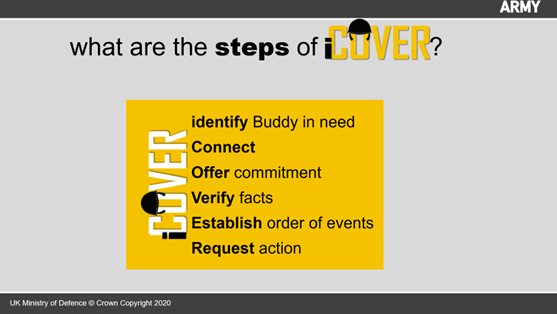
iCOVER if acutely distressed

Respect 

Each person will respond to events differently

Explore how your colleagues are doing and respect where they are

Reassurance

Recap the facts of what has happened / is happening.

Orientate them to the present with specific questions 

Remind them that they’ve done the best for the patient

Reflection

Ask what thoughts would bring them some peace / comfort at this time?

Encourage them to engage in reflective activity - Prayer / mindfulness / meditation / writing a letter to a loved one or writing in a journal

Ritual

What acts or actions bring them peace / calm?

Could you share one of your ‘rituals’ with them.

Review

Keep checking in with colleagues and encourage space for recovery


Last reviewed: 13/10/2026

Next review date: 13/10/2027