
Paediatric Respiratory Illness
Objectives
To cover the management of common childhood respiratory conditions in the deployed setting.
Scope
- Croup
- Bronchiolitis
- Pertussis (whooping cough)
Audience
Registered healthcare professionals fulfilling a general role in a forward medical location or in an Emergency Department within a deployed hospital facility.
Initial Assessment & Management
Croup
Croup is a clinical diagnosis with a typical history of a characteristic “barking” cough, inspiratory stridor and a hoarse voice. Fever, coryza and increased work of breathing may also be clinical features. Symptoms worsen when children are agitated or upset, and at night.
Differential diagnosis – it is important to consider alternative diagnoses especially in those who fail to respond to the treatments set out above. In the box below are alternative diagnosis and key differences which may help in discerning croup from other illnesses. Other differentials not covered below but should be considered include foreign body inhalation, anaphylaxis, laryngomalacia, peritonsillar abscess/quinsy and diptheria.
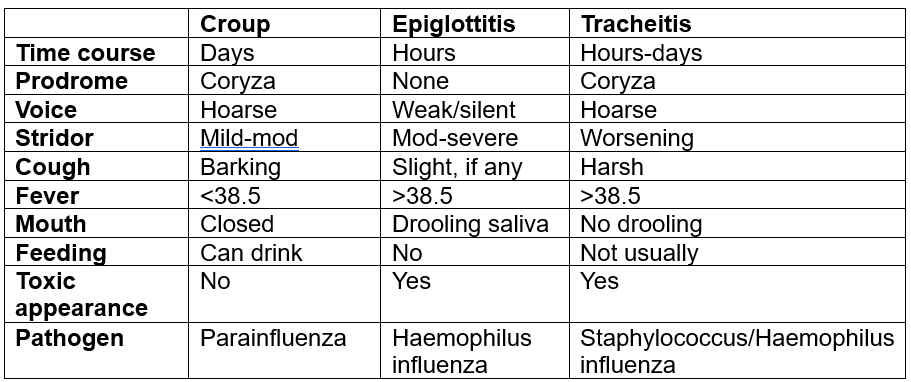
Initial assessment of croup:
- Minimise distress to the child as much as is practicable. Try to encourage care givers to stay with child to keep calm.
- Avoid unnecessary investigations e.g. blood pressure monitoring, cannulation and throat examination as this may provoke laryngospasm.
- Assess child using MARCH approach noting points above.
- Assess the child for work of breathing (Subcostal/intercostal recession, tracheal tug, head bobbing, nasal flaring).
- If indicated, oxygen can be administered using “wafting” technique and utilisation of parents/care givers may help increase compliance.
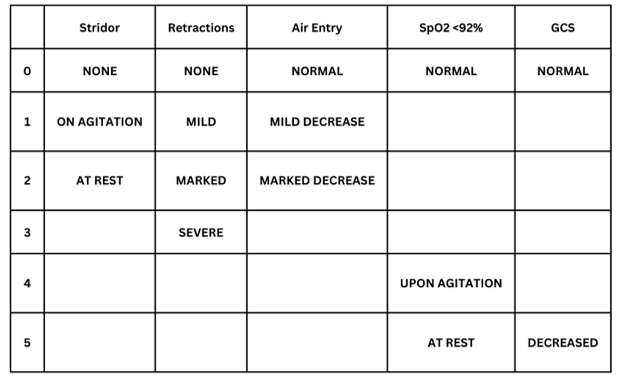
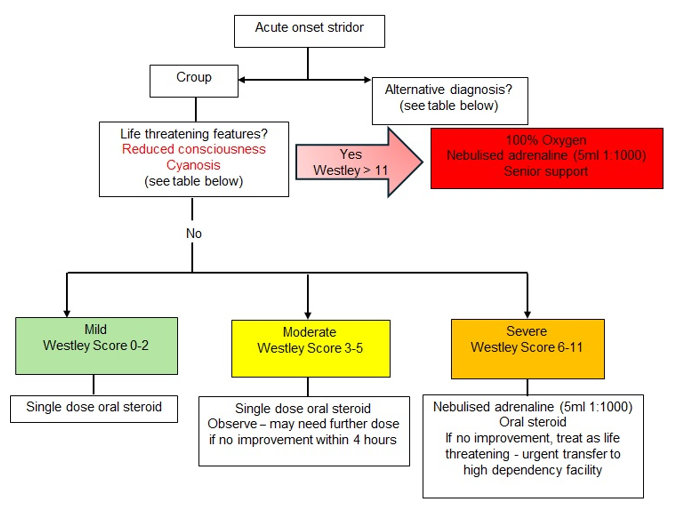
Assess severity using Westley Score (table below) then treat according to flow chart below:
Management of croup
Steroids:
- Standard treatment in the UK is single dose oral dexamethasone (0.15mg/kg) but this may not be available in all modules (MACM only)
- Alternative: oral prednisolone (1-2mg/kg) can be given by crushing tablets and mixing into small volume of water/yoghurt etc
IV Fluids:
- IV fluids are not usually required in the immediate management of life-threatening croup and cannulation may cause unnecessary distress, only attempt this if confident of success for delivery of a lifesaving intervention, anaesthetic drugs. If there is vomiting/dehydration, impaired consciousness consider checking a blood glucose.
Life threatening Croup
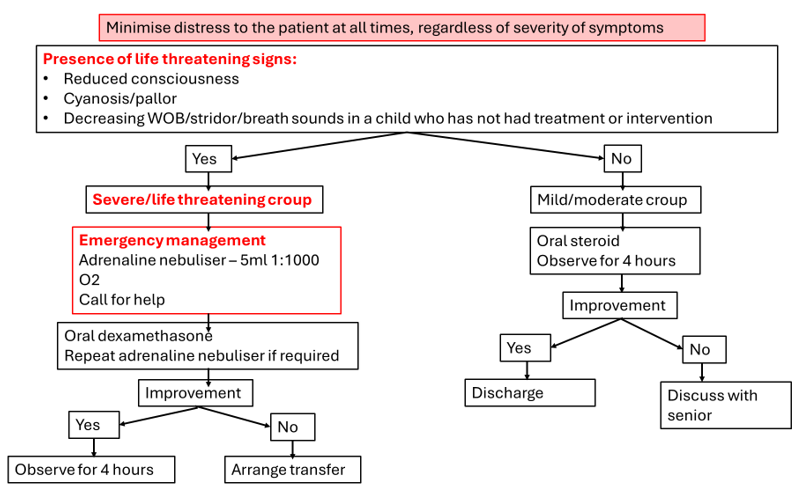
Advanced Assessment and Management of Croup
Children with severe croup, which is unresponsive to the treatments above, are at risk of acute airway compromise. Clinicians involved in their care should be aware of this and be prepared to intervene should this be required.
If facilities exist to allow for paediatric intubation and Critical Care level care, then involve specialists early in the assessment process to ensure a deterioration plan can be established.
If a child is unable to be evacuated to local healthcare facilities, then further treatment can be administered to symptomatic, severely unwell patients. Adrenaline nebulisers can be repeated, and steroids can be readministered daily until symptoms have improved.
Epiglotitis
This condition presents similar to croup and can be initially managed as per the croup guidelines above. It is important to note the differences.
Epiglottitis is inflammation of the epiglottis itself; it is more severe than croup and can require advance airway support.
In both epiglottis and croup oxygen should be administered only if it can be done without upsetting the child as any intervention may precipitate airway obstruction.
Caution: Oxygen use may give false reassurance around assessment of cyanosis and oxygenation may increase distress to the child.
DO NOT ATTEMPT to examine the oropharynx.
Bronchiolitis
Bronchiolitis is an illness presenting in children under 2y, peaking around 3-6months of age. It is almost always caused by a RSV (Respiratory Syncytial Virus) and has a classic symptom pattern with symptoms typically at their most severe between days 3 and 5.
Presenting symptoms of bronchiolitis typically include:
- cough
- increased work of breathing
- tachypnoea
- bilateral wheeze and/or crackles
- apnoeas (especially in children under 6 months old)
- general coryza and mild fever
- reduced oxygen saturations
- reduced feeding
Undiagnosed congenital cardiac issues may mimic bronchiolitis. Check femoral pulses are both present, listen for a heart murmur, feel for hepatomegaly and look for sweating as part of the clinical examination as these may be signs of a cardiac problem. Cardiac issues will need transfer to a more suitable facility and short-term avoidance of fluid boluses.
In patients with temp >39 degrees – consider assessing for signs of sepsis, particularly in children less than 3 months old. These children should be managed in line with the Fever in under 5’s guideline.
Initial management bronchiolitis
Most patients with bronchiolitis will not require any intervention and can be suitably managed at home with the correct safety netting advice. Assessing respiratory and nutritional aspects of the patient are the key components for guiding further management.
Assess severity:
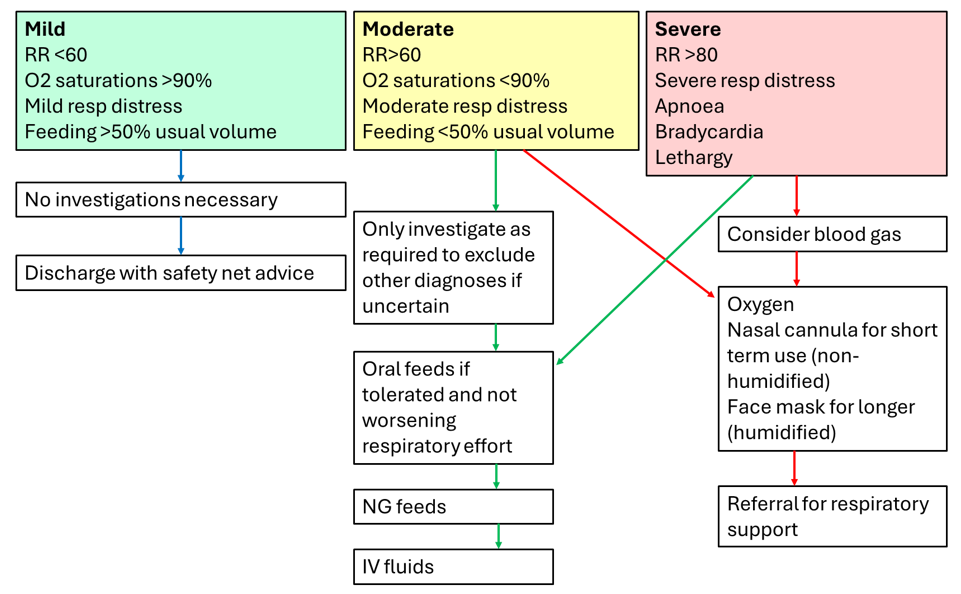
Bronchiolitis is primarily a clinical diagnosis and investigations are not usually required. CXR is not required unless there are signs of an alternative diagnosis.
An Istat or blood gas may indicate respiratory failure and tiring but should be interpreted in the context of the time it was performed as clinical status will change.
If there are concerns around poor oral intake a blood glucose should be checked.
Respiratory support.
Give Oxygen if sats persistently <90% (humidified if possible).
Consider advance respiratory support options, or transfer to specialist facility for children:
- Unable to maintain sats >90% despite support
- Having recurrent apnoeas
- Who are tiring
Nutritional support
If a child is tolerating <50% daily feeds then support may be required.
Children <3 months should receive approx. 100ml / kg / 24 hours – this can be delivered in small frequent feeds if required.
Children >3 months should receive approx. 150ml/kg/24 hours.
If oral feeds are not tolerated, NG feeding should be considered.
In severe cases where children are being considered for respiratory support, IV hydration may need to be considered. If IV fluid maintenance is required, 80% of the maintenance requirement should be given.
Advanced Assessment and Management of bronchiolitis
Patients requiring oxygenation and feeding support will usually require transfer to a facility where expertise and equipment can be provided.
Pertussis (‘Whooping Cough’)
Pertussis is a respiratory illness caused by Bordetella Pertussis. A vaccine, usually given to mothers in the UK during pregnancy, and to the infant as part of the UK Vaccination Schedule, can prevent the illness developing, reduce severity and spread of the condition.
It is highly contagious, and although often a benign illness it can have severe complications, especially in younger patients. Patients with suspected pertussis will need to be isolated and clinical staff will need appropriate respiratory PPE to prevent spread of infection.
The initial phase presenting as a coryzal type illness may last a couple of weeks and is the most contagious stage. This progresses to the coughing stage which can last weeks, may be worse at night or in cold weather and may relapse several times before it gradually improves.
Pertussis is a notifiable disease in the UK and therefore deployed IPC leads will need to action accordingly. Notification should be made on suspicion of the diagnosis.
Initial assessment and management of pertussis
Assessment of the patient will guide management.
Most patients will be suitable to have oral antibiotics and can be discharged early.
Recognising the children who are at risk of becoming more unwell is key.
Pertussis is rare in vaccinated patients.
The initial phase can present very similarly to many other childhood respiratory illnesses:
- Runny nose/coryza
- Prolonged coughing bouts – often followed by post-tussive vomiting and possibly syncope/apnoeas, these can last for weeks and may or may not have the classic “whoop”
- Fever isn’t usually present but is a severity predictor when it is
- In babies under 3 months symptoms might also include:
- Increased work of breathing
- Apnoeas
- Seizures
- Pneumonia
Most patients will be suitable for discharge with oral antibiotics and safety net advice. More unwell patients may need interventions and transfer to a more appropriate facility.
Antibiotics:
Antibiotics are only effective if started within 14 days of the cough commencing. In rare circumstances, they can be given up to 21 days after the onset of the cough if there are vulnerable contacts in the home e.g. pregnant women or unimmunised infants.
Choice of antibiotic is usually clarithromycin or azithromycin. Co-trimoxazole would be the next choice if macrolides are not available but must not be given to infants under 6 weeks old.
Where possible, children should isolate for the first 48 hours of antibiotic treatment
Advanced assessment and management of pertussis
Features in patients who need further interventions:
- Cyanosis
- Fever
- Increased work of breathing
- Pneumonia
- Poor oral intake
- Apnoeas
- Seizures
- Signs of pulmonary hypertension/cardiovascular compromise
Consider associated sequelae due to raised intra-thoracic pressure: rib fractures, pneumothorax, rectal prolapse, umbilical/inguinal hernias and dehydration.
These patients may should considered for transfer to a suitable facility. Supportive treatments – oxygen, NG feeds/IV fluids, paracetamol should be considered. Seizures should be managed in line with seizure guidelines.