Objectives
To outline the management of patients presenting to deployed medical facilities with chest pain due to acute coronary syndrome, excluding those presenting with ST elevation Myocardial Infarction (STEMI).
Scope
This guideline intends to cover the initial investigations and management of patients presenting to the deployed medical treatment facilities with cardiac sounding chest pain and later diagnosed and acute coronary syndrome. It confirms the definition of ACS/NSTEMI/Unstable angina . It does not include management of STEMI, for which another dedicated guideline is available.
Initial Assessment & Management
Background:
Acute Coronary Syndromes are broadly categorised into ST elevation Myocardial infarction and those which present similarly, but do not have appearances of ST elevation on 12 lead ECG (Non-ST-Elevation Acute Coronary Syndrome - NSTE-ACS). ST elevation suggests a specific pathology known as plaque rupture, where a pre-existing atherosclerotic plaque ruptures, leading to rapid platelet aggregation and subsequent occlusion of a coronary artery. This leads to hyperacute ischaemia of myocardium supplied by that artery, and treatments are focussed on rapid clearance of the artery by breaking down the newly formed clot (thrombolysis) or in current practice in the UK, angioplasty and stent insertion.
This guideline focusses on NSTE-ACS. Cardiogenic chest pain in NSTE-ACS still comes from ischaemia. This may be from a plaque rupture that leads to an only partially occluded coronary artery, or one that occluded briefly and spontaneously cleared. A significant minority reflect a supply/demand mismatch in situations such as tachyarrhythmia, severe anaemia or profound hypoxia, where the myocardium becomes ischaemic due to the oxygen requirement of the heart muscle temporarily exceeding the ability of the coronary arteries to deliver it (a type 2 Myocardial infarction).
This distinction is important. The risk of thrombolysis is relatively high, and studies suggest the benefit only outweighs the risk in acute occlusive plaque rupture (STEMI). Studies suggest the risk of thrombolysis is higher than the benefit derived when thrombolysis is used in sub-total occlusions, or any pathology that leads to classical cardiac chest pain without STEMI appearances on ECG (NSTE-ACS), so this is not typically recommended.
Definition
NSTE-ACS describes a clinical presentation consistent with acute myocardial ischaemia without ST- segment elevation on the presenting ECG and includes unstable angina and NSTEMI. The distinction is biomarker defined: NSTEMI is associated with a troponin rise higher than a set cut off suggesting myocardial necrosis (see information below) in conjunction with symptoms and signs of acute myocardial ischaemia, whereas unstable angina has ischaemic symptoms and signs but no elevation of troponin.
Troponin assays are available at role 2 and are qualitative, giving a positive/negative result. Some modules also contain a quantitative assay; check with the deployed biochemist which assay is available and for the cut-off values that apply.
Initial presentation
Chest Pain:
- Character: A heavy, pressure-like or squeezing discomfort.
- Site: Typically retrosternal (behind the sternum).
- Radiation: May radiate to the left arm, neck, jaw, or back.
- Intensity: Moderate to severe, often described as distressing and persistent.
Time:
Onset:
- Sudden onset, often occurring at rest or with minimal exertion. Pain at rest or with minimal exertion indicates plaque instability or rupture and reduced coronary perfusion.
- In contrast stable angina is usually precipitated by a consistent amount of exertion or emotional stress and relieved by rest or nitrates within 5–10 minutes, reflecting a fixed coronary obstruction rather than an acute event.
Duration: Typically lasts more than 20 minutes and does not fully resolve with rest or nitrates.
Symptoms: SOB, sweating, nausea, palpitations
Observations: Pulse, BP, Resp rate, Saturations
Initial investigations
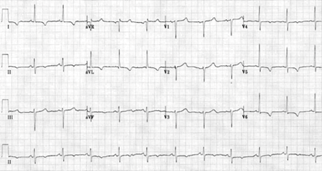
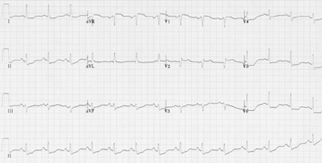
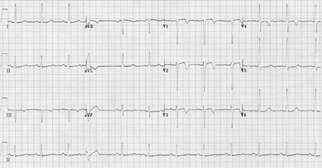
12L ECG
POC troponin if available
Place on continuous cardiac monitoring
All ACS should be transferred IMMEDIATELY to R2/3/HNF as able and Admit to critical care area for monitoring
if STEMI confirmed on 12L ECG AND expected transfer delay consider thrombolysis – see thrombolysis pathway
If NSTE-ACS confirmed with very high-risk features (i.e. haemodynamic instability, ongoing chest pain refractory to medications, acute heart failure, cardiac arrest or recurrent and dynamic ECG changes) consider treating as STEMI
Management
Immediately
12L ECG – repeat if already done prior to arrival and continuous cardiac monitoring
Repeat GTN S/L if ongoing pain
Ensure aspirin 300mg PO has been given (± PPI only if at high bleeding risk)
Oxygen if saturations <92%
IV morphine if in pain
Advanced Assessment & Management
ROLE 2 & 3
Further Medication
If coronary angiography +/- PCI planned within 24 hours:
Give unfractionated heparin / enoxaparin (1mg/Kg/BD S/C route)
If coronary anatomy not known, pre-treatment with P2Y12 receptor inhibitor is not recommended in the immediate setting
If coronary angiography +/- PCI not planned within 24 hours:
Give unfractionated heparin / enoxaparin (1mg/Kg/BD S/C route) OR Fondaparinux
Give P2Y12 receptor inhibitor (Ticagrelor 180mg LD or prasugrel 60mg LD). Clopidogrel 300-600mg LD also an option if ticagrelor/prasugrel unavailable / contraindicated
Concurrent Investigations *as available - availability will depend on deployed role, host or allied nation capability.
Bloods – FBC, U&Es, LFTs, Glucose, Blood sugars, Cardiac enzymes
Chest X-ray – any signs of congestion or mediastinal enlargement suggesting alternative diagnoses.
Bedside transthoracic echocardiogram / V scan - dependent on skillset of deployed physician
Evacuation
ALL cases of ACS (STEMI and NSTEMI) require evac to a cardiac centre ASAP
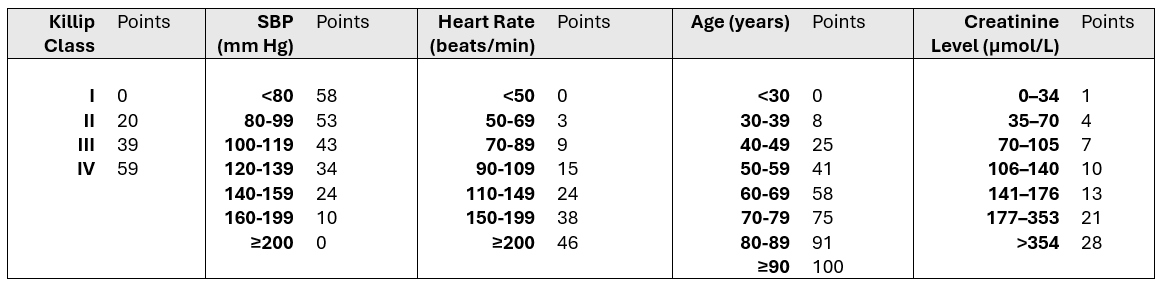
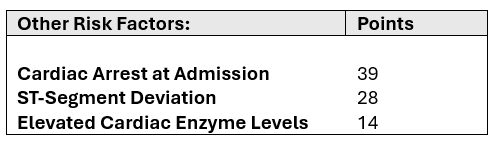
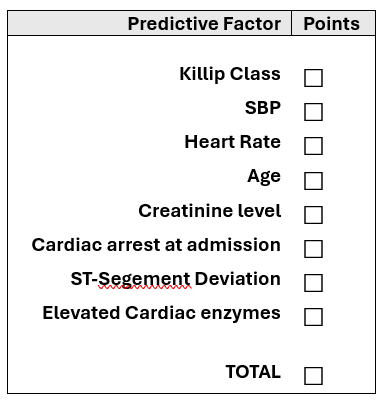
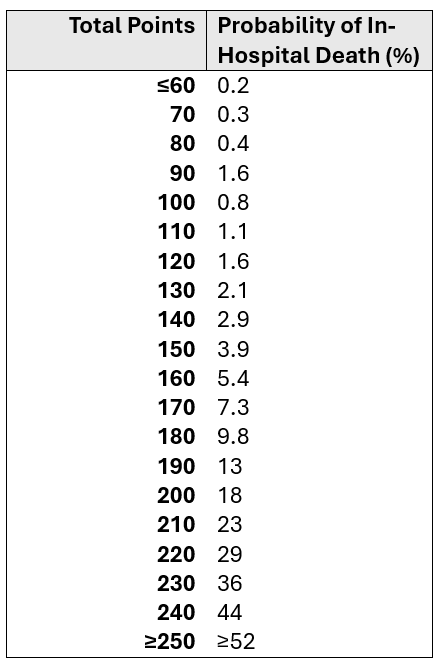
Calculate GRACE score: (see drop down)
>140 high risk
>180 may require transfer to ICU
In those with NSTE-ACS, there should be an early inpatient invasive strategy (<24 hours from onset) if high risk features are present: dynamic ECG changes, GRACE score >140, transient ST elevation)